Source-linked records
Keep the order, relevant notes, treatment course and supporting documents in the same case.

One coordinated platform
Keep the records, insurance work and next steps together. Give physicians a focused review and the team a clear path forward.
Built around physician time
Read the clinical summary, open the source passages, answer essential questions and approve or return the work.
Physicians can also access the full case workflow when needed. Staff handles the supporting preparation, administrative details and routine follow-up.
Evidence, connected
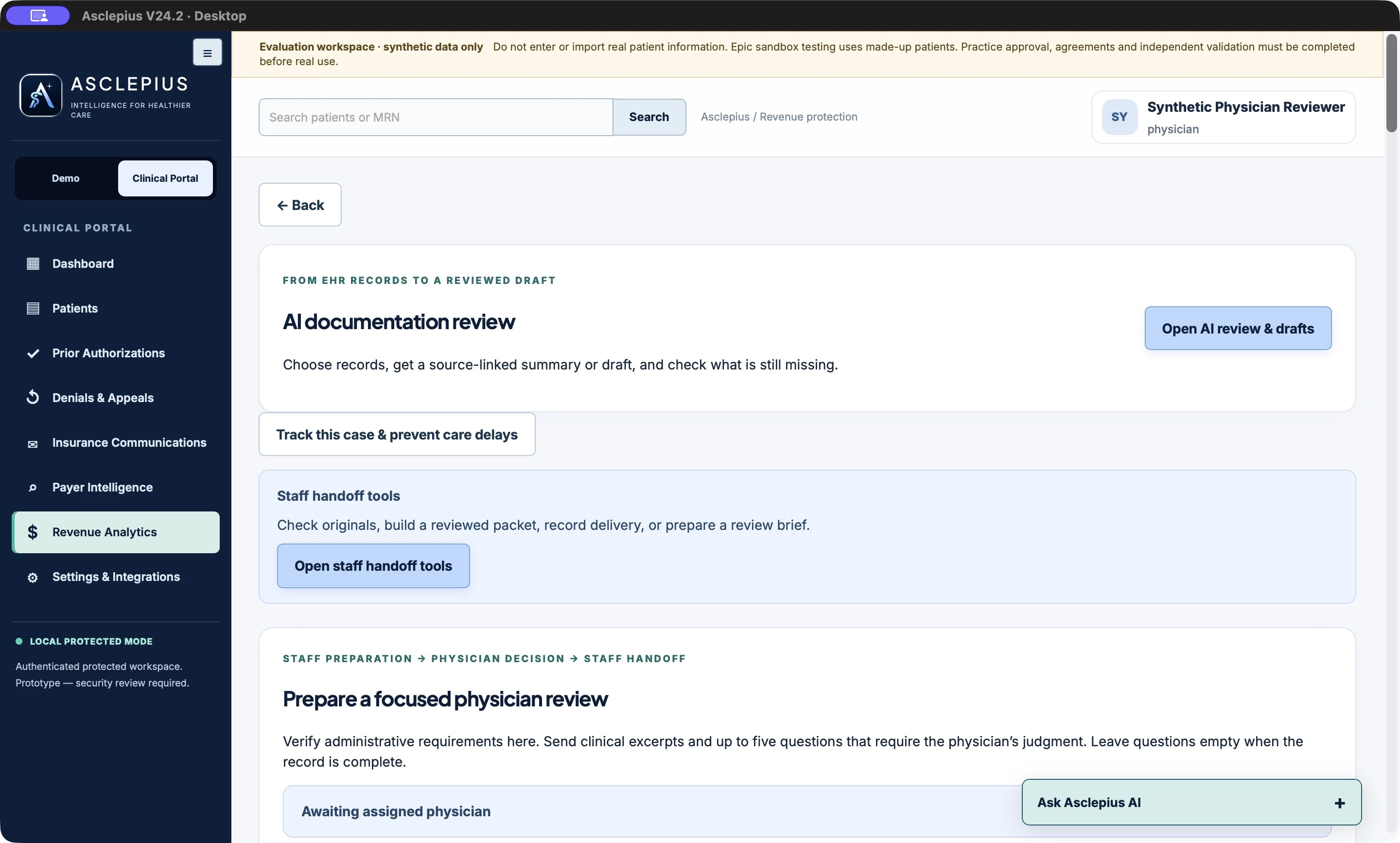
Keep the order, relevant notes, treatment course and supporting documents in the same case.
Identify missing details and assign the next action instead of guessing at undocumented facts.
Prepare the argument and relevant attachments, with a visible version and explicit release steps.
AI that supports the team
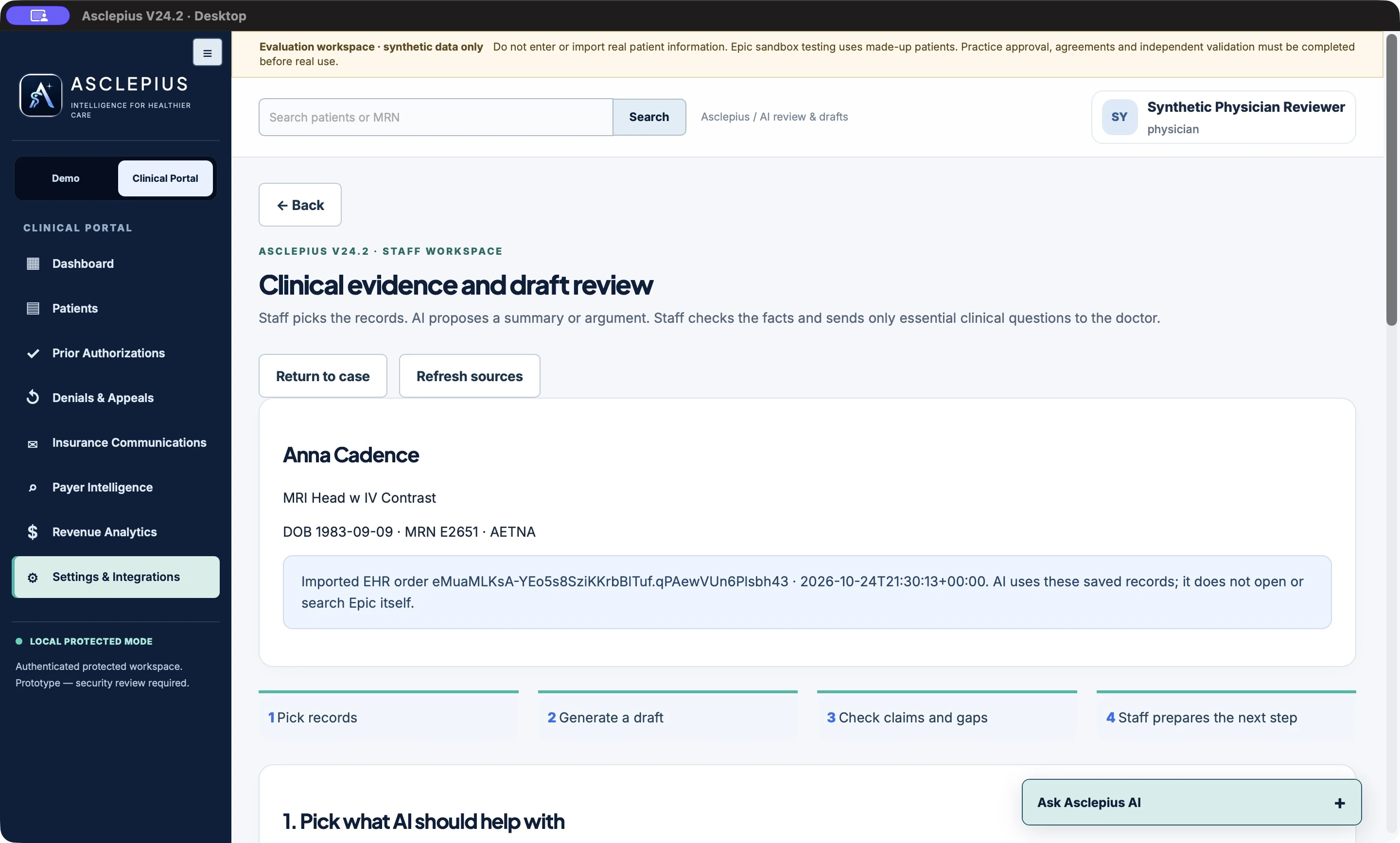
The source assistant retrieves permitted case records, shows exact excerpts, identifies gaps and suggests a next step.
Bounded workflow plans help organize authorization preparation, appeals, follow-up and revenue review.
The optional generative-model interface supports clinical summaries, authorization drafts and denial arguments with source references and missing-information flags.
Model drafting requires a configured provider, appropriate data-processing approval and clinical-quality evaluation. The delivered source assistant does not by itself call a language model.
EMR compatibility
Epic selected-patient chart retrieval and order import have been tested with fictional patients in the public sandbox.
The capability catalog also covers athenaOne, Oracle Health, eClinicalWorks, NextGen, MEDITECH, Veradigm, Greenway and Practice Fusion. Catalog entries describe access methods and onboarding; they are not proof of a connected production system.
Each practice needs permission, appropriate agreements and an approved application configuration.
Confirm the patient, source order and record identity before bringing data into a case.
Validate the permitted resources, access scope and real workflow with the selected vendor and organization.
The selected-patient read/import path retrieved order, coverage, condition and clinical-note resources using fictional public-sandbox data. It does not establish production Epic approval, complete chart availability, current insurance eligibility or a live payer connection.
Follow the work
Track clinical review, packet preparation, delivery records and recorded responses as separate parts of the workflow.
Review payment discrepancies against their sources. Keep expected amounts separate from verified payment and recovery.
Use documented case outcomes to investigate recurring denial reasons and improve future preparation.
Locally recorded updates are visible to authorized users. Automatic payer updates require an accepted integration; refreshing the view does not contact an insurer.
The platform supports packet review and export, recorded delivery, follow-up and configurable integration paths. A live route requires a selected payer or clearinghouse, accepted agreements, verified destination, tested transmission, receipt matching and response handling. A clinical sign-off is separate from payer approval.
Desktop + upcoming mobile
The native iPhone companion is being developed around assigned work, clinical review and source access, connected to the same backend as the desktop experience.
Explore Asclepius Mobile →Evaluate the whole workflow
Physician time. Staff rework. Care delays. Documented outcomes.
We’re seeking early clinical partners to evaluate the workflow and shape the next stage of development. Time savings, approval rates and financial results must be established through practice evaluation; interface demonstrations alone do not establish those outcomes.